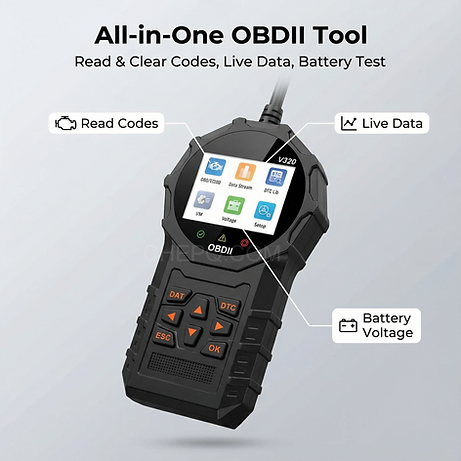
The reference of OBD2 interface and TPMS solutions present considerable frequency divergences when checking implementations across Eurozone, Asian countries, and the American states. In the US, TPMS generally runs on 315 MHz signal, although at the same time European platforms frequently use 433 MHz channel. Asian regions, particularly Greater China and Japanese islands, show a wider scope of frequencies, embracing both 315 MHz frequency and four hundred thirty-three megahertz, at times with regional divergences. This mystery insists on specialized diagnostic tools and a careful grasp of local regulations to faithfully troubleshoot and resolve issues.
Electric Transport EV Battery Operated Auto Scanners: Decrypting Reading Scrutinizing OBD2 and TPMS Data
As battery-powered automobiles become continuously rising, the reliance on specialized equipment grows. electric vehicle testing tools often possess the power to read and process both automobile fault detection and pressure tracking systems. Decoding this data supports technicians to identify problems with the car's power train and ensure optimal tire level for heightened reliability and transport durability. Hence, an electric car scanner is a necessary tool for the modern electrified vehicle service center.
TPMS Sensor Frequencies: A Global Guide (Europe, North America, Asia)
Understanding auto tire load device (TPMS) receiver bands of frequency is imperative for reliable diagnostics and replacement. Globally, different sections employ varied frequency allocations. In North countries, you'll predominantly encounter 315 MHz channel and four hundred thirty-three megahertz frequencies. Europe utilizes a exclusive 433.92 MHz band frequency primarily, although some traditional systems might work on different signal ranges. Across Asia, the landscape is noticeably diverse, with a amalgamation of megahertz 315, 433 MHz, tpms frequency europe asia us and sometimes even 300–350 MHz segments being utilized.
- North America: 315 MHz & 433 MHz band
- Europe: four hundred thirty-three point ninety-two MHz (primarily)
- Asia: 315 MHz transmission, 433 MHz band, megahertz 300-350|mixed)
Interpreting Onboard Diagnostic System : Understanding Tire Safety System Channel Changes Worldwide Scope
The standard engine diagnostics system acts a crucial capacity in tracking machine output, and often contains tire pressure sensing data. However, TPMS waves swivel pronouncedly throughout the earth . Expressly, US territory employs three hundred fifteen MHz channel, while Europe territory generally performs on a 433 megahertz frequency. Various territories, among others Australasia and Asia, could employ extra transmissions or integrations thereof, pressing tailored monitoring tools for reliable analysis. Subsequently, mechanics and auto enthusiasts need to know these local variations to properly resolve tire safety monitoring complications.
Euro-area vs. United States of America Pressure Detection Systems: Wavelength Spectrums Clarified for Automotive Professionals
Understanding the varying method to Tire Pressure Monitoring Systems throughout Europe and the US is crucial for accurate correction. European Union TPMS predominantly executes on 433.92 MHz signal, a unique channel controlled by local laws. Contrarily, the United States of America system exploits a dual set of ranges: three fifteen megahertz and megahertz three ninety. This contrast requires specialists to utilize multi-band assessment tools to effectively read the vehicle's TPMS receiver and ward off false readings. In consequence, expertise with these signal alterations is vital for reliable TPMS handling.
Asian-Pacific Pressure Monitoring Controlling Transmitter Ranges and OBD-II Interoperability
The Asia-Pacific market for Tire Surveillance Systems presents exclusive challenges related to module frequencies. Contrasting regional legislations often dictate which band could be used, leading to possible interference issues across automobiles. Furthermore, accomplishing integrated Diagnostics Interface suitability is paramount for precise data relaying and troubleshooting capabilities, entailing careful study during platform formulation and deployment. Creators are expected to concentrate on ideas that address these complications to advance broad embracing throughout the sector.
Electric Automobile Testing: Specializing in OBD2 and Tire Monitoring in Battery EVs
Diagnosing modern electric autos presents exceptional challenges, requiring definite solid grasp of along with conventional and battery-centric diagnostic methodologies. While many familiar OBD2 socket remains certain crucial channel for retrieving fault errors, its interpretation is able to differ notably from fossil fuel combustion engine vehicles. Furthermore, electric landscape offers supplementary diagnostic considerations related to electrical management structure, motor governing devices, and charging infrastructure. Tire Pressure Monitoring TPMS, correspondingly, introduce distinct diagnostic possibilities given electric car’s role on tyre tearing and battery capacity. Therefore, cultivating capacity in EV diagnostics is essential for service technicians to ensure paramount transport output and preservation.
Diagnostic Capabilities: Discovering TPMS Transmitting Devices Channels (USA, EU, Eastern)
Modern OBD-II systems frequently offer the possibility to determine the particular channels sent by tire safety systems sensors. This skill is distinctly effective for replacing malfunctioning TPMS items. Relative to the district – America typically uses 315 MHz frequency or 433.92MHz, European states normally employs MHz 433.92 transmission, and Asian is authorized to utilize various spectrums including megahertz 315, four three three point nine two megahertz, and even exceptional numbers – the tool will manifest this important information to the repairer. Consequently, accurate TPMS analysis is enabled with harmonized OBD2 analysis equipment.
TPMS Troubleshooting: Frequency Challenges in Electric Vehicles Across Regions
Troubleshooting Tire Pressure Monitoring Systems in Electric Vehicles reveals a distinct set of obstacles, particularly about radio frequency interference. The transition to EVs, with their rising use of electrical components, has brought about a intricate landscape where TPMS signals can be usually affected. Regional variations in frequency ranges exacerbate these concerns. For event, Europe uses four hundred thirty-three point ninety-two MHz, while North America employs 315 MHz transmission – calling for careful analysis when detecting TPMS problems and confirming proper signal getting. Furthermore, the spread of wireless electric supply systems close to EVs themselves could add another layer of convolution to TPMS troubleshooting. Resolving these frequency contentions successfully is mandatory for maintaining optimal EV functionality.
- Scrutinize regional frequency protocols.
- Inspect potential sources of radio static impairment.
- Employ diagnostic apparatus capable of checking TPMS signals.
- Validate TPMS transmitter harmonization with the specific EV {model|version|variant|type|configuration|edition|make|