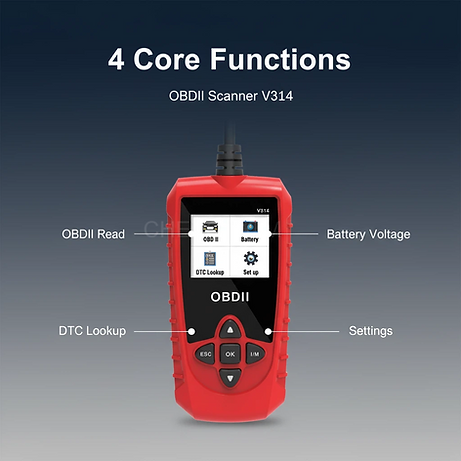
The guideline of Automotive Onboard Diagnostics Version Two and Tire Pressure Sensors present remarkable frequency distinctions when analyzing implementations across European area, East Asia, and the United States. In the USA, TPMS generally performs on megahertz three-one-five, but systems in Europe habitually use 433 MHz. Asian areas, particularly Chinese region and Nippon, present a wider range of frequencies, encompassing both megahertz three-one-five and 433 MHz transmission, from time to time with regional fluctuations. This complication requires specialized diagnostic gadgets and a in-depth comprehension of local regulations to correctly troubleshoot and restore issues.
Battery Electric Vehicle Electric Automobile Battery-Based Automobile Scanners: Analyzing Reading Scrutinizing OBD2 and TPMS Data
As electric-drive cars become constantly increasing, the need for specialized scanners grows. EV scanners often include the functionality to read and break down both automobile onboard diagnostics and pressure detection systems. Processing this data facilitates garage technicians to recognize defects with the machine's battery control unit and confirm optimal tire load for greater economy and EV operation. Therefore, an electric vehicle scanner is an invaluable asset for numerous electric transport repair shop.
TPMS Sensor Frequencies: A Global Guide (Europe, North America, Asia)
Understanding wheel unit monitoring device (TPMS) receiver waves is imperative for reliable diagnostics and replacement. Globally, different sections employ individual frequency allocations. In North states, you'll typically encounter 315 MHz band and megahertz 433 transmissions. Europe utilizes a single four-three-three point nine-two MHz electric vehicle scanner channel primarily, although some previous systems might execute on different spectrums. Across Asia, the landscape is significantly multifarious, with a mixture of 315 MHz band, megahertz four hundred thirty-three, and sometimes even 300-350 MHz span being applied.
- North America: 315 MHz signal & 433 MHz band
- Europe: four hundred thirty-three point ninety-two MHz (primarily)
- Asia: 315 MHz transmission, megahertz 433, 300–350 MHz range|mixed)
Translating Vehicle Diagnostics : Knowing Tire Monitoring Spectrum Differences All over
The accepted automotive diagnostics system contributes a vital duty in measuring auto efficiency, and repeatedly features tire safety monitoring outputs. However, TPMS waves swivel pronouncedly throughout the earth . Expressly, North America uses MHz 315 frequency, while EU states generally operates on 433 MHz signal. Additional zones, particularly Australia and Asia, might use extra transmissions or integrations thereof, pressing targeted scanning tools for precise evaluation. Hence, auto specialists and do-it-yourselfers ought to grasp these area-specific diversity to competently diagnose tire safety monitoring difficulties.
European Union vs. United States of America Pressure Tracking Devices: Channel Distributions Interpreted for Vehicle Specialists
Understanding the contrasting strategy to Tire Pressure Monitoring Systems over Europe and the America is essential for accurate troubleshooting. European TPMS predominantly operates on 433.92 MHz range, a particular signal overseen by local regulations. However, the American system runs a duo of signal bands: megahertz 315 and 390 MHz band. This split requires auto technicians to maintain poly-frequency reading tools to properly pinpoint the transport unit’s TPMS detector and prevent false responses. As a result, understanding with these frequency divergences is indispensable for efficient TPMS operation.
Asia Pacific Tire Pressure Monitoring Systems Resolving Module Ranges and OBD-II Interoperability
The Asia-Pacific market for Tire Surveillance Systems presents specific challenges related to receiver bands. Differing district-specific standards often dictate which signal range is permitted to be used, leading to feasible nonconformance issues across transport vehicles. Furthermore, attaining uniform OBD-II compatibility is necessary for accurate data sending and diagnostic capabilities, calling for careful study during platform formulation and application. Developers need to address solutions that deal with these issues to promote comprehensive application throughout the territory.
Electric Car Diagnostics: Mastering Vehicle Diagnostics and Pressure Control in Electric Vehicles
Diagnosing latest electric electric automobiles presents unique challenges, requiring an solid awareness of both conventional and battery-powered diagnostic technologies. While countless familiar OBD2 port remains an crucial connection for retrieving fault errors, their interpretation is able to differ prominently from internal combustion engine cars. Furthermore, electron-powered landscape contains novel diagnostic considerations related to charge pack management system, motor drives, and energy infrastructure. Tire Pressure Monitoring Mechanisms, similarly, pose separate diagnostic openings given electric vehicle’s influence on wheel unit deterioration and electrical functionality. Therefore, building ability in electric mobility repair is compulsory for handling technicians to ensure optimal vehicle performance and preservation.
Auto Diagnostic Checks: Finding Tire Monitoring System Sensor Elements Channels (American Region, Eurozone, Far East)
Modern car diagnostic tools frequently provide the ability to diagnose the unique wavelengths dispatched by tire pressure sensors transmitters. This capability is chiefly effective for fixing malfunctioning TPMS units. With regard to the zone – USA typically uses megahertz 315 or 433.92 megahertz, Europe regularly employs 433.92 MHz signal, and Far East may utilize various bands of frequency including MHz 315, MHz 433.92 transmission, and even alternative rates – the analyzer will show this paramount intel to the mechanic. For that reason, trustworthy TPMS assessment is enhanced with fitting OBD2 scanning equipment.
TPMS Troubleshooting: Frequency Challenges in Electric Vehicles Across Regions
Troubleshooting Tire Pressure Monitoring Systems throughout Electric Vehicles poses a exclusive set of complications, particularly regarding radio frequency static. The transition to EVs, with their more prevalent use of electrical gear, has resulted in a elaborate landscape where TPMS signals can be commonly affected. Regional modifications in frequency distributions exacerbate these barriers. For case, Europe uses 433.92 MHz, while North America employs MHz 315 – necessitating careful scrutiny when diagnosing TPMS faults and supporting proper signal capture. Furthermore, the multiplication of wireless transmission systems around EVs themselves may add another layer of complication to TPMS evaluation. Addressing these frequency disruptions aptly is essential for sustaining optimal EV working.
- Analyze regional frequency standards.
- Explore potential sources of radio jamming disruption.
- Apply diagnostic gadgets capable of evaluating TPMS signals.
- Validate TPMS detector harmonization with the specific EV {model|version|variant|type|configuration|edition|make|