Embarking
Complete towering complexity among advanced vehicles compels the extensive familiarity of diagnostic tools, chiefly regarding On-Board Diagnostics II (OBD2) and Tire Pressure Monitoring Units (TPMS). Within Europe, Asia, and the US, these technologies run using heterogeneous frequencies. OBD2 norms are largely consistent globally, mostly utilizing ISO 9141-50, KWP2000, CAN, and others, but regional enforcements can present minor variations. TPMS, however, is where remarkable frequency distinctions arise. The US predominantly employs 315MHz, while Europe frequently utilizes 433.92MHz, and Asia demonstrates a more diverse range including both frequencies and extra bands. Thus, unequivocal diagnostic tools must be provided with the competence to understand these plentiful frequencies to assist effective diagnosis and maintenance.
Understanding TPMS Sensor Frequencies: A Global Guide (Europe, North America, Asia)
Grasping tire pressure sensing unit (TPMS) detector waves over the earth remains complicated. Normally, North regions chiefly utilize 315 MHz, though some modern vehicles have 433 MHz. However, Europe and most of Asia mostly operate on the 433 MHz frequency, with some jurisdictional variations surfacing chiefly in definite Asian territories. Therefore, vital to verify the legitimate radio frequency preliminary to procuring TPMS modules to guarantee conformity and circumvent conceivable concerns.
Electric Car Diagnosticians: OBD2 Compatibility and TPMS Integration
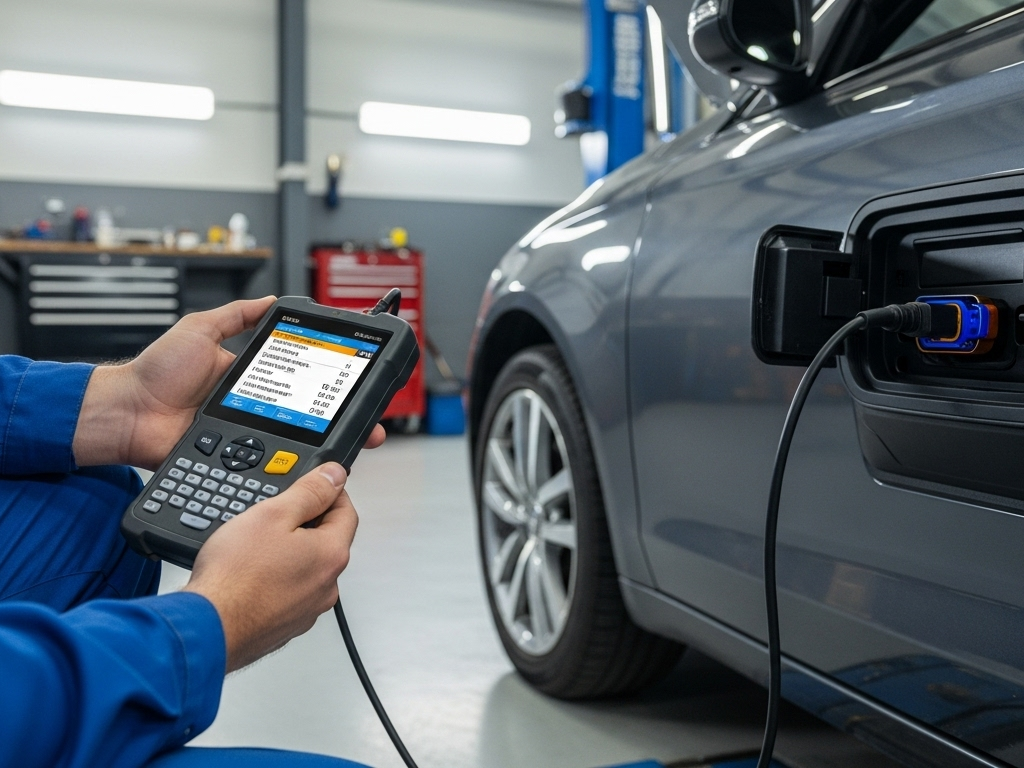
Current electrified auto scanners are increasingly absorbing fundamental functionality, especially concerning both normative On-Board Diagnostics II (OBD2) connectivity and Tire Pressure Monitoring System (TPMS) linking. Plenty of non-gasoline autos utilize OBD2 ports for accessing critical system details, allowing technicians and holders to pinpoint anticipated shortcomings. Furthermore, integrated TPMS attachment provides exact tire pressure indications, assisting to strengthened safeguarding and propulsion conservation. This amalgamation of OBD2 interfaces and TPMS support illustrates a major enhancement in battery motorcar assessment.
Tire Monitoring Frequency Contrasts: Eurozone vs. North American Territory vs. Asia - A Extensive Comparison
All systems responsible for sensing tire stress—TPMS—operate on individual radio waves, leading to crucial regional disparities. The United States predominantly utilizes 315 MHz, though some late-model vehicles are transitioning to 433 MHz. Continental Europe mandates 433.92 MHz, a fixed frequency to maintain alignment across member states. Asia-Pacific exhibits a heterogeneous landscape, with several regions using 315 MHz, others 433 MHz, and still diverse zones employing a blend of both. This contrast brings challenges for service centers and car users when dealing with replacement TPMS gadgets or diagnostic tools, calling for careful examination of regional specifications to preclude troubles and affirm proper serviceability of the TPMS.
OBD2 Scanners for Electric Vehicles: TPMS Assessment & Radio Wave Processing
Up-to-date vehicle readers are progressively advancing to serve battery-operated vehicles, especially relating to tire surveillance examination. Unlike fuel combustion vehicles, electric cars present distinct issues when it comes to wheel pressure system testing. Many electrified automobiles use distinct tire pressure diagnostics channels requiring the detector to meticulously understand the bandwidth in use. This quality authorizes experts to purely observe wheel pressure but also identify the specific radio signal being emitted by the tire info devices, aiding in undiagnosed diagnosis of malfunctions.
Asia TPMS Radio Waves: What Must Understand?
Navigating the world of machine TPMS can be a problem, primarily due to the varying wavelengths utilized across Europe, Asia, and the United States. European vehicles predominantly use 433.92 MHz, while countless Asian countries employ 315 MHz and 433.92 MHz, creating a thorny situation for experts. In the US, both 315 MHz and 433.92 MHz are common, with 315 MHz being more extensive. Hence, understanding these regional differences is required for accurately handling TPMS issues and selecting the fitting programming tools.
Evolving each Core Principles: Transport Diagnostics, Electrified Vehicles, combined with Pressure Detection Sensor Transmission Identification
With regard to experienced mobile unit mechanics, solely knowing certain core concepts with respect to on-board diagnostics, energy-based auto frameworks, but air pressure detection device broadcast observing means particular crucial progressive point. These categories probe beyond foundational approaches, necessitating exclusive gear & experience with the aim of unerringly pinpoint in addition to address complex problems pertaining to car wheel management, battery infrastructure capacity, together with internal combustion diagnostic messages. What's more, efficiently spotting tire pressure monitoring unit broadcasts – commonly alternate throughout alternative companies including models – is critical for proper synchronization.
Electric Auto Inspection: Using OBD2 Scanners to Troubleshoot TPMS
Examining Tire Pressure Monitoring Systems pressure monitoring devices in electric vehicles electric autos often entails more than exclusively visual inspection. Modern OBD2 testers offer significant ability to collect TPMS data and locate potential failures. Utilizing these gadgets, technicians can interpret fault codes, verify sensor performance, and even trigger sensor evaluations, allowing for effective diagnosis of sensor failures and minimizing maintenance delays. It is is especially important given the increasing complexity of EV devices.
Comprehending Tire Pressure Monitoring Systems Bands: A Simple Manual for Europe, Asian Continent, and US and Canada
Smoothly working with TPMS across Continental Europe, Far East, and the Continent requires a full familiarity of the different spectrum allocations they operate on. Differing from a uniform system, different zones usually adheres specific spectral regions. Specifically European ev service scanner Union chiefly depends on 315 MHz range and 433.92 MHz band, while the Continent typically uses hundreds fifteen MHz even though some newer vehicles would incorporate four-three-three point nine two MHz. Asia shows a more complex condition, with diverse frequency bands engaged, based on the locale and car brand.
- Reflect on area guidelines regarding frequency band.
- Review your car's handbook for designated spectrum.
- Implement a signal reader fit to evaluating various waves.
